Colloquially known as the “Congo Conference,” the Berlin Conference of 1884-1885 marked the beginning of Germany’s colonial empire. At this time, European leaders divided the continent of Africa, each hoping to obtain the richest and most valuable territories.
Under the leadership of Chancellor Otto von Bismarck, a newly unified Germany gained control of colonial territories in the modern day regions of Burundi, Rwanda, Tanzania, Namibia, Cameroon, Gabon, Congo, Central African Republic, Chad, Nigeria, Togo, and Ghana. They dubbed these territories: German East Africa, German South West Africa, German Cameroon, and Togoland.
The treatment of Africans in German colonies was unjust and cruel. This brief colonial empire included a genocide of the Herrero people in Namibia that was not acknowledged by Germany until 2021. (Namibia: Genocide and the Second Reich)
After the establishment of this (albeit fraught) relationship between Germany and its colonies, Africans began traveling to Germany. Poorer Africans were brought to Europe by wealthy Germans to work as servants or to be “exhibits” in human zoos. On the other hand, many African elites sent their children to Germany in the hopes that they would receive a prestigious education and increase the social status of their families. Regardless of the circumstances under which they arrived, African immigrants were not welcomed by Kaiser Wilhelm II with open arms. At best, they were ogled and displayed, at worst mistreated and abused. (Aitken)
Nevertheless, the relatively small community of Afro-Germans was mostly able to slip through the cracks and survive. This changed during the 1930s amidst the rise of National Socialism, and the eventual election of Adolf Hitler. (Ayim)
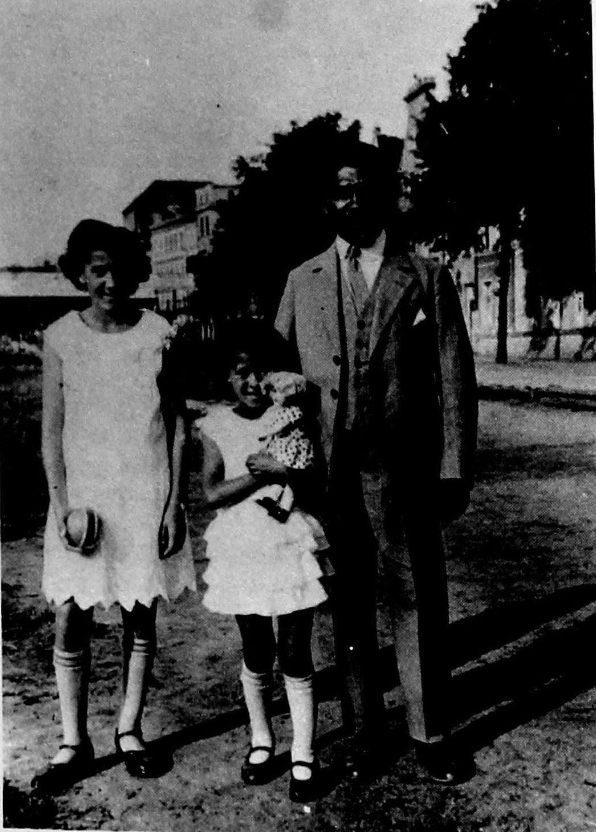
The chapter attached below comes from an English translation of the groundbreaking book Farbe Bekennen (Showing Our Colors) written by Afro-German women May Ayim, Katharina Oguntoye, and White-German Dagmar Schultz. The chapter below, entitled “Our Father was Cameroonian, Our Mother, East Prussian, We Are Mulattoes,” features a conversation between sisters Doris Reiprich and Erika Ngambi ul Kuo. The pair discuss living through World War II as Afro-Germans, their father having immigrated to Germany from Cameroon in 1881.
Read below and hear their stories in their own words.
Bibliography:
Aitken, R. (2019, October 10). Making Visible the Invisible: Germany’s Black diaspora, 1880s -1945. Sheffield Hallam University. Retrieved May 11, 2022, from https://www.shu.ac.uk/research/in-action/projects/being-black-in-nazi-germany
BBC. (2018, April 7). Namibia: Genocide and the Second Reich (BBC). YouTube. Retrieved May 11, 2022, from https://www.youtube.com/watch?v=Rbon6HqzjEI
Opitz, M., Oguntoye, K., Schultz, D., Adams, A. V., & Lorde, A. (1991). Showing Our Colors: Afro-German Women Speak Out (First ed.). The University of Massachusetts Press.
